
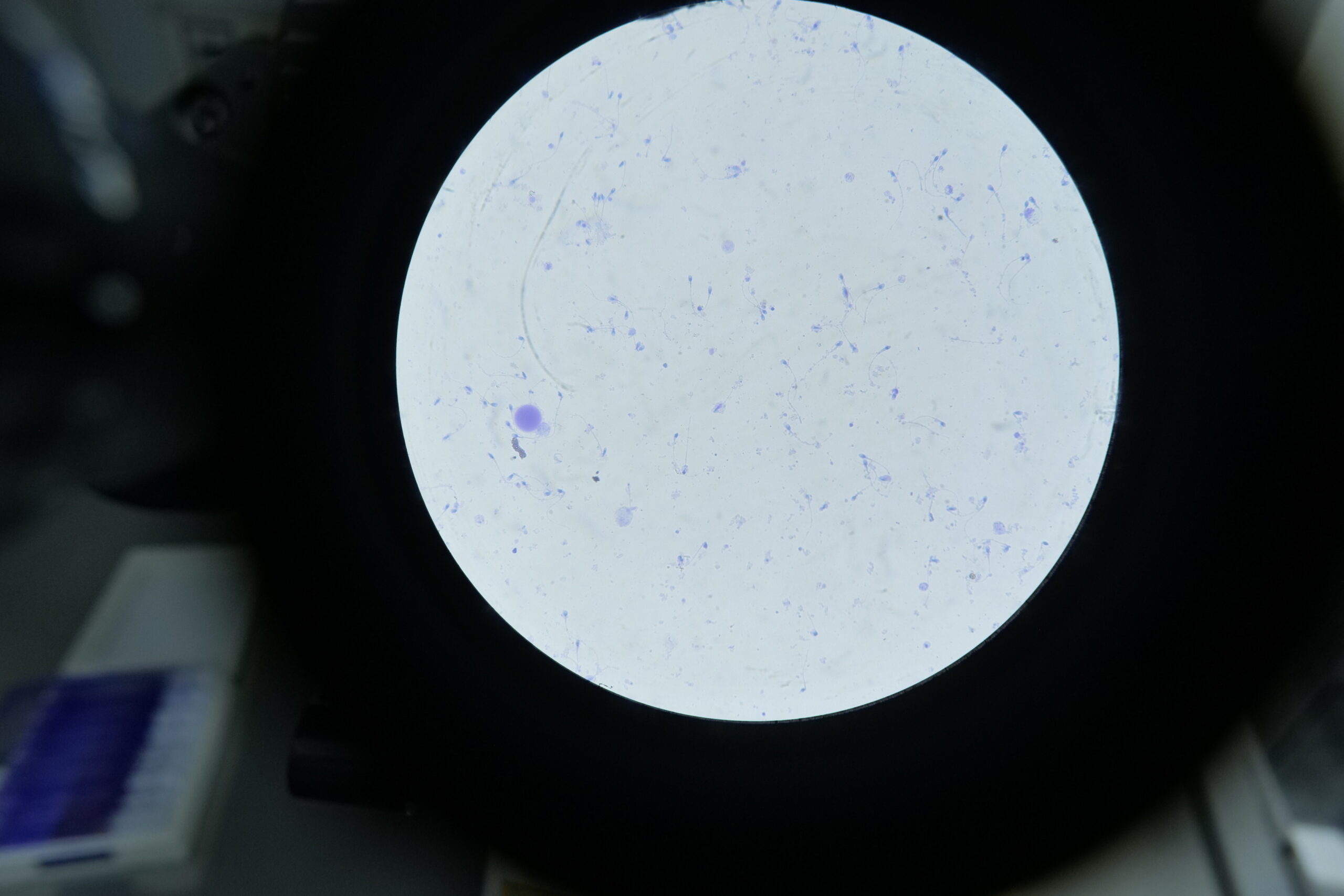
If you and your partner are trying to conceive, a semen analysis is often the first and most important test for male fertility evaluation. This simple, non-invasive test provides detailed insights into sperm count, motility, shape, and overall reproductive health.
In fact, male factors contribute to nearly 40–50% of infertility cases, making semen analysis a crucial step in diagnosis and treatment planning.
At CRAAFt, our specialists use WHO 2021 guidelines to deliver accurate semen analysis and personalized fertility care.
What Is a Semen Analysis?
A semen analysis (also called a sperm test or seminogram) evaluates the quality and viability of sperm in a semen sample.
More Specifically, It helps doctors determine whether sperm can:
- Reach the egg
- Survive in the reproductive tract
- Successfully fertilize the egg
Doctors commonly recommend this test if:
- A couple has not conceived after 6–12 months
- There is a history of testicular issues, surgery, or varicocele
- You are planning fertility treatments (IUI, IVF, ICSI)
- You want to confirm vasectomy success
How to Prepare for Semen Analysis
Proper preparation is essential because it helps ensure accurate and reliable results:
Before the test to improve test accuracy:
- Abstain from ejaculation for 2–5 days
- Avoid alcohol, smoking, and excessive caffeine
- Do not use lubricants during collection
- Inform your doctor about any medications or supplements
On the day of the test:
- Provide the sample in a sterile container
- Deliver the sample within 30–60 minutes if collected at home
- Ensure the entire sample is collected
In many cases, doctors may repeat the test after 4–6 weeks to confirm the findings, since sperm quality naturally fluctuates over time.
What Does a Semen Analysis Measures?
A semen analysis evaluates several important parameters. Understanding each one, moreover, can help you better interpret your fertility health and test results.
1. Semen Volume
Semen volume refers to the total fluid produced during ejaculation. Typically, a normal semen volume ranges between 1.5 mL and 5 mL.
However, low semen volume may indicate:
- Problems with the seminal vesicles or prostate
- Hormonal imbalance
- Incomplete sample collection
2. Sperm Concentration (Sperm Count)
Sperm concentration measures the number of sperm present per millilitre of semen.
According to WHO 2021 guidelines, a normal sperm concentration is 16 million sperm per mL or more.
On the other hand:
- A low sperm count is called oligospermia
- The complete absence of sperm is known as azoospermia
3. Total Sperm Count
Total sperm count refers to the total number of sperm in the entire ejaculate.
Generally, a total sperm count of 39 million or more is considered normal.
4. Sperm Motility
Sperm motility measures how effectively sperm move. This parameter is particularly important because sperm must swim efficiently to reach and fertilize the egg.
Normal values include:
- Progressive motility (forward movement): at least 30%
- Total motility (all movement): at least 42%
Poor sperm movement is called asthenozoospermia.
5. Sperm Morphology (Shape)
Morphology assesses the shape and structure of sperm.
According to WHO Kruger strict criteria, at least 4% of sperm should have a normal shape.
Abnormal sperm shape is called teratozoospermia.
6. Sperm Vitality
Vitality measures the percentage of live sperm in the sample.
Ideally, at least 54% of sperm should be alive, even if some are not moving.
Moreover, a high proportion of immotile but living sperm may suggest a structural defect in the sperm tail, such as immotile cilia syndrome.
7. Semen pH
Normally, semen is slightly alkaline, with a pH between 7.2 and 8.0.
This alkalinity is important because it helps protect sperm from the acidic environment of the vagina.
8. Liquefaction Time
Freshly ejaculated semen is usually thick and coagulated initially. However, it should liquefy within 15–30 minutes.
Delayed liquefaction may impair sperm movement and reduce the chances of fertilization.
9. White Blood Cells
A small number of white blood cells in semen is considered normal.
However, more than 1 million white blood cells per mL may indicate infection or inflammation. This condition, known as leukocytospermia, can negatively affect sperm function.
What Do Abnormal Semen Analysis Results Mean?
Importantly, an abnormal semen analysis result does not automatically mean you are infertile. Instead, it represents one part of a larger fertility evaluation.
Common abnormal findings include:
- Oligospermia — Low sperm count (below 16 million/mL)
- Azoospermia — No sperm detected in the ejaculate
- Asthenospermia — Poor sperm motility
- Teratospermia — High proportion of abnormally shaped sperm
- Oligoasthenoteratospermia (OAT syndrome) — Combination of low count, poor motility, and abnormal morphology
Furthermore, because sperm quality can vary naturally due to illness, stress, or lifestyle factors, doctors usually repeat an abnormal test after 4–6 weeks before making a final diagnosis.
Depending on the findings, your doctor may also recommend additional investigations such as:
- Hormonal profile testing
- Scrotal ultrasound
- Genetic testing
These tests help identify the underlying cause more accurately.ional tests — including a hormonal profile, scrotal ultrasound, or genetic testing — to identify an underlying cause.
What Causes Poor Sperm Quality?
Several lifestyle, medical, and temporary factors can affect sperm health.
Lifestyle Factors like:
- Smoking and alcohol
- Obesity and poor diet
- Stress and lack of sleep
- Heat exposure (tight clothes, hot baths)
Medical Conditions
In addition, certain medical problems may contribute to poor sperm quality:
- Varicocele (most common treatable cause)
- Hormonal imbalance
- Infections (STIs, prostatitis)
- Genetic disorders
Medications & Treatments
Likewise, some treatments and medications may affect fertility:
- Chemotherapy
- Steroids
- Certain antibiotics
Temporary Factors
Meanwhile, temporary conditions can also influence semen quality:
- Fever or illness
- Stress
- Incorrect abstinence duration
What Happens After the Test?
Depending on your results, your doctor may recommend several next steps.
These may include:
- Lifestyle modifications
- Treatment for infections or varicocele
- Hormonal medications or fertility therapies
Additionally, some couples may benefit from Assisted Reproductive Technology (ART), including:
IUI (Intrauterine Insemination)
Doctors commonly use IUI for mild sperm abnormalities.
IVF (In Vitro Fertilisation)
IVF may help couples facing moderate-to-severe male factor infertility.
ICSI (Intracytoplasmic Sperm Injection)
In ICSI, specialists inject a single sperm directly into an egg. Therefore, this technique is especially useful for very low sperm counts or poor motility.
Surgical Sperm Retrieval (TESA / PESA / TESE)
Doctors may recommend these procedures for men with azoospermia when sperm retrieval directly from the testes or epididymis becomes necessary.
How to Improve Sperm Quality Naturally
The good news is that sperm quality can improve in many cases. Since sperm take approximately 74 days to mature, positive lifestyle changes today may produce measurable improvements within about 3 months.
Evidence-supported strategies include:
- Eat a balanced diet rich in antioxidants, zinc, and vitamins
- Exercise regularly and maintain a healthy weight
- Manage stress effectively
- Avoid smoking and excessive alcohol consumption
- Wear loose-fitting clothing
- Treat underlying medical conditions promptly
When to Seek Medical Help
You should consult a fertility specialist at CRAAFt if:
- You have not conceived after 12 months of trying
- Your semen analysis results are abnormal
- You have a history of testicular issues or surgery
- You experience hormonal or sexual health problems
Most importantly, early consultation can significantly improve treatment success rates.
Final Thoughts
A semen analysis is a simple yet powerful diagnostic tool that plays a major role in evaluating male fertility. By identifying sperm-related issues early, doctors can recommend targeted treatments, lifestyle changes, or assisted reproductive techniques to improve the chances of conception.
However, a single abnormal result does not confirm infertility. In most cases, doctors recommend repeat testing before making a diagnosis, since many conditions respond well to treatment.
At CRAAFt, our specialists provide accurate semen testing, advanced fertility evaluation, and personalized treatment plans to support successful parenthood.
FAQs
- Is one semen analysis test enough?
- Not always. Semen parameters fluctuate naturally, and factors such as illness, stress, and abstinence duration can affect results. Therefore, doctors often repeat an abnormal test after 4–6 weeks before drawing conclusions.
- What is a normal sperm count?
- According to WHO 2021 guidelines, a normal sperm concentration is 16 million sperm per mL or more, with a total sperm count of at least 39 million per ejaculate.
- Does a normal semen analysis guarantee fertility?
- Although a normal result significantly improves the likelihood of natural conception, it does not guarantee it. Female reproductive factors and other variables also play an important role.
- Is the semen analysis test painful or embarrassing?
- Fortunately, the test is not painful. It simply involves providing a semen sample by masturbation, usually in a private clinic room. Moreover, fertility clinic staff are trained to ensure patient dignity and comfort throughout the process.
- Can I collect a semen sample at home?
- Yes, some clinics allow home collection if you live nearby. However, you must keep the sample at body temperature and deliver it to the laboratory within 30–60 minutes. Always confirm the clinic’s instructions beforehand.
- How long does it take to get semen analysis results?
- Most laboratories report semen analysis results within 1 to 2 hours.
- Can sperm quality improve with lifestyle changes?
- Yes, in many cases it can. Since spermatogenesis takes approximately 74 days, improvements such as quitting smoking, reducing alcohol intake, improving diet, and managing weight may show measurable benefits within about 3 months.
A Note on Emotional Wellbeing
Receiving an unexpected semen analysis result can feel emotionally overwhelming. Feelings of anxiety, uncertainty, or distress are entirely normal.
However, it is important to remember that male factor infertility is very common and contributes to approximately 40–50% of infertility cases. Moreover, many men go on to father children either naturally or with fertility treatment.
Most importantly, you are not alone. Talking openly with your fertility specialist, counsellor, or support group can provide reassurance and emotional support during this journey.
Leave a Reply