
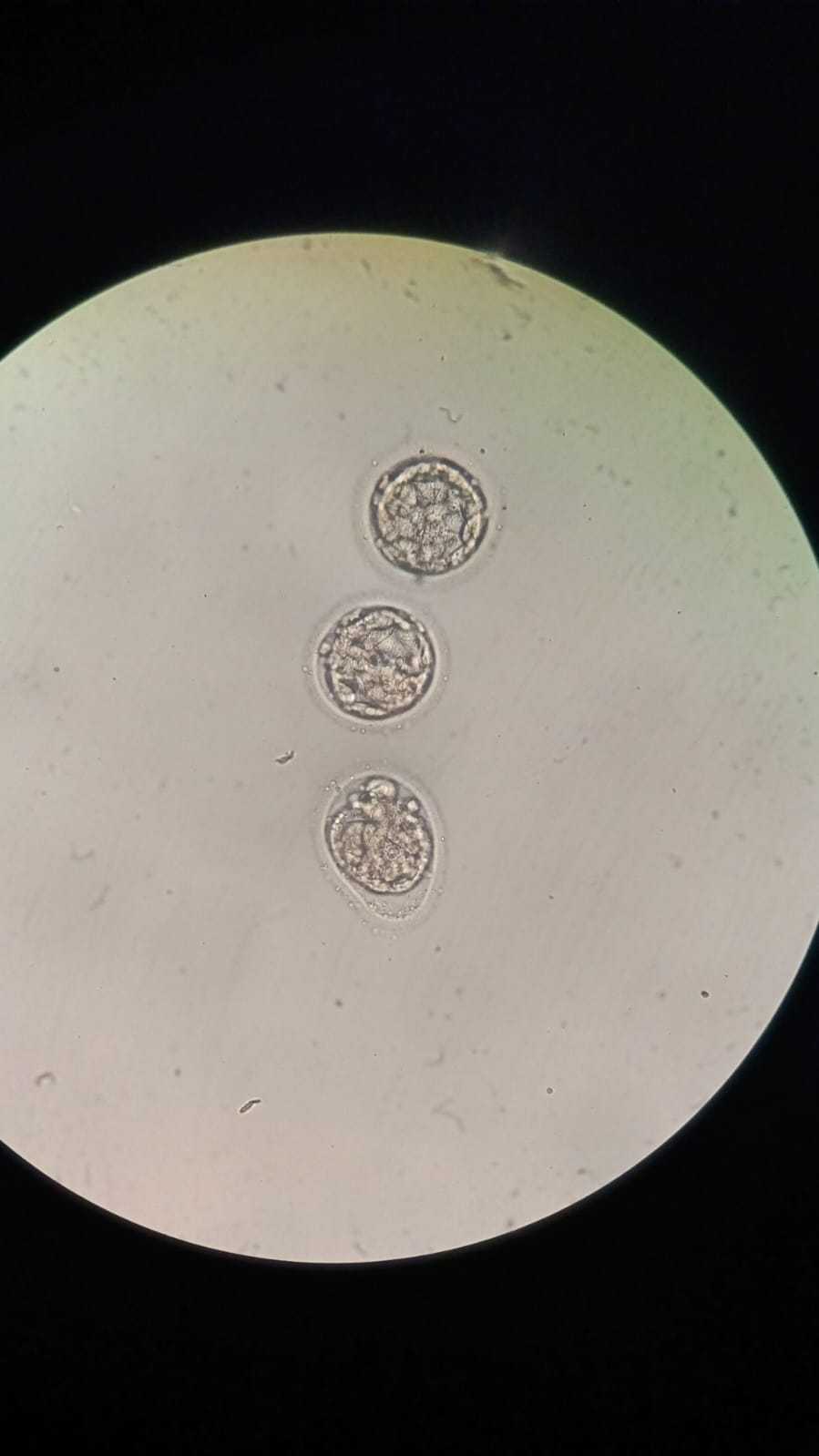
If you are undergoing In Vitro Fertilization (IVF), you may hear your fertility specialist or embryologist mention embryo grades such as 3BB, 4AA, or 5AA. These numbers and letters often sound confusing, especially during an emotionally challenging fertility journey.
Embryo grading is an important part of IVF because it helps embryologists assess how an embryo is developing in the laboratory. However, it is equally important to understand that embryo grading does not predict pregnancy with certainty. Instead, it helps doctors identify the embryo that has the highest chance of implantation based on its appearance.
At CRAAFt, our fertility specialists combine embryo grading with clinical expertise, patient history, and modern reproductive technology to develop personalized IVF treatment plans.
What Is Embryo Grading?
After fertilization, embryos continue developing in the IVF laboratory over several days. During this time, embryologists examine them under a microscope and evaluate their development using standardized grading systems.
Embryo grading is simply a visual assessment that describes:
- How the embryo is developing
- Whether the cells appear healthy
- Which embryo is most suitable for transfer or freezing
Importantly, embryo grading describes how an embryo looks, not whether it will definitely result in pregnancy.
When Are Embryos Graded?
Embryologists commonly assess embryos at two stages.
Day 3 Embryos (Cleavage Stage)
By Day 3, an embryo usually contains 6–8 cells.
At this stage, embryologists evaluate:
- Number of cells
- Cell symmetry
- Cell size
- Degree of fragmentation (small pieces of cellular debris)
Generally, embryos with evenly sized cells and minimal fragmentation are considered to have better developmental potential.
Day 5 or Day 6 Embryos (Blastocyst Stage)
Most fertility centres now prefer transferring embryos at the blastocyst stage because more information becomes available about embryo development.
A blastocyst contains:
- An inner fluid-filled cavity
- Inner Cell Mass (ICM) – develops into the baby
- Trophectoderm (TE) – develops into the placenta
This stage allows a more detailed assessment of embryo quality.
Understanding the Gardner Embryo Grading System
The Gardner Grading System is the most widely used embryo grading method worldwide.
A blastocyst is graded using one number followed by two letters, such as:
- 3BB
- 4AA
- 5AB
Each part of the grade has a specific meaning.
The Number (1–6): Blastocyst Expansion
The number indicates how much the embryo has expanded.
| Grade | Meaning |
|---|---|
| 1–2 | Early blastocyst |
| 3 | Full blastocyst |
| 4 | Expanded blastocyst |
| 5 | Hatching blastocyst |
| 6 | Completely hatched blastocyst |
As the embryo expands, it becomes more prepared for implantation.
The First Letter (Inner Cell Mass – ICM)
The first letter evaluates the group of cells that will eventually develop into the baby.
Grade A
Many tightly packed healthy cells
Grade B
Moderately packed cells
Grade C
Few loosely arranged cells
Higher ICM grades generally indicate better developmental potential.
The Second Letter (Trophectoderm – TE)
The second letter assesses the outer cell layer that forms the placenta.
Grade A
Numerous healthy cells
Grade B
Moderate number of cells
Grade C
Few cells
A well-developed trophectoderm is associated with better implantation potential.
What Does 4AA Mean?
For example:
4AA
- 4 → Expanded blastocyst
- A → Excellent Inner Cell Mass
- A → Excellent Trophectoderm
A 4AA embryo is generally considered an excellent-quality embryo.
Similarly:
3BB
- Full blastocyst
- Good Inner Cell Mass
- Good Trophectoderm
Although 4AA embryos usually have higher implantation potential, many healthy babies are also born from 3BB, 4BB, 5BB, and even lower-graded embryos.
Does a Higher Grade Guarantee Pregnancy?
No.
One of the biggest misconceptions is that a higher embryo grade guarantees pregnancy.
In reality:
- A beautiful-looking embryo may still have chromosomal abnormalities.
- A lower-grade embryo can still implant successfully and result in the birth of a healthy baby.
Embryo grading is only one factor that influences IVF success.
What Else Influences IVF Success?
Several additional factors affect treatment outcomes, including:
- Female age
- Egg quality
- Sperm quality
- Uterine health
- Endometrial thickness
- Embryo genetics (chromosomal status)
- Laboratory conditions
- Embryologist expertise
Therefore, fertility specialists evaluate the entire clinical picture, not just the embryo grade.
Why Do Fertility Clinics Grade Embryos?
Despite its limitations, embryo grading remains an essential tool because it helps fertility specialists:
- Select the embryo with the greatest implantation potential
- Decide which embryos are suitable for freezing (vitrification)
- Standardize communication between embryologists and doctors
- Monitor and improve laboratory performance over time
Questions You Can Ask Your Fertility Specialist
If you’re undergoing IVF, consider asking:
- Which embryo grading system does your clinic use?
- What was the grade of my embryo?
- What does my embryo grade mean?
- Would Preimplantation Genetic Testing (PGT-A) provide additional useful information?
- How do you decide which embryo to transfer first?
Final Thoughts
Embryo grading is a valuable tool that helps embryologists evaluate embryo development and choose the most suitable embryo for transfer or freezing. However, it is not a guarantee of pregnancy. Many factors—including embryo genetics, maternal age, uterine health, and overall fertility—also influence IVF success.
At CRAAFt, our fertility team combines advanced embryology, evidence-based IVF protocols, and personalized patient care to maximize the chances of a successful pregnancy.
FAQs
- What is embryo grading in IVF?
- Embryo grading is a visual assessment that helps embryologists evaluate embryo development and select the best embryo for transfer.
- What does a 4AA embryo mean?
- A 4AA embryo is an expanded blastocyst with excellent inner cell mass and trophectoderm quality, making it one of the highest-quality grades.
- Is a 3BB embryo good?
- Yes. A 3BB embryo has good developmental potential, and many successful pregnancies occur with embryos of this grade.
- Does a higher embryo grade guarantee pregnancy?
- No. Embryo grading improves embryo selection but cannot guarantee implantation or a successful pregnancy.
- Should I choose PGT-A along with embryo grading?
- For some couples, PGT-A provides additional information about embryo chromosomes. Your fertility specialist can advise whether it is appropriate based on your age, fertility history, and treatment goals.
Leave a Reply