
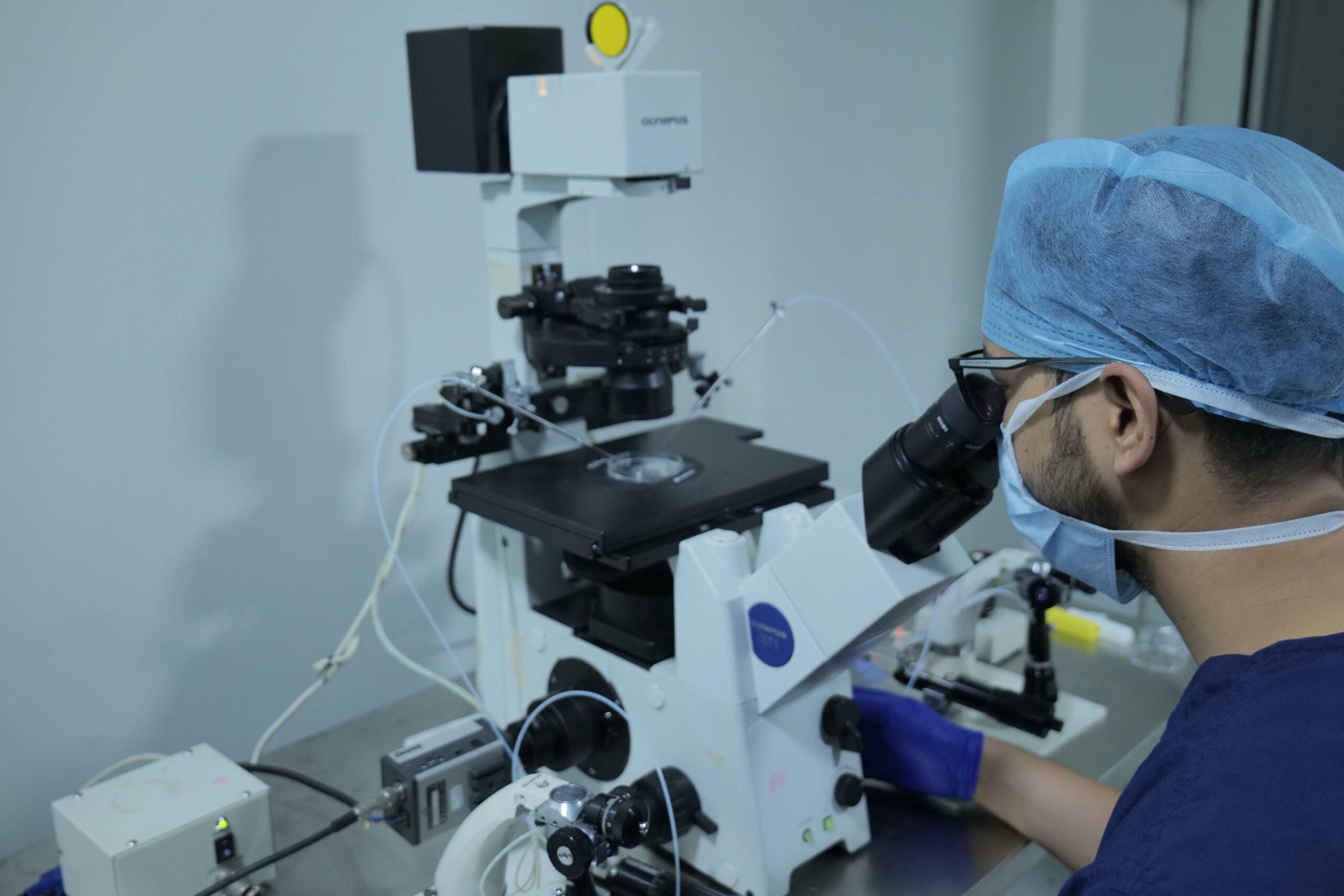
Infertility affects millions of couples worldwide, and male-factor infertility contributes to nearly 40–50% of all cases. Fortunately, advances in reproductive medicine have dramatically improved fertility treatment outcomes over the past few decades. Among the most significant breakthroughs is Intracytoplasmic Sperm Injection (ICSI), a highly specialized fertility procedure that has helped millions of couples achieve successful pregnancies and build families.
Today, ICSI is one of the most commonly performed assisted reproductive techniques worldwide. It is particularly beneficial when sperm quality or quantity is severely compromised and natural fertilization becomes difficult or impossible.
At CRAAFt, our fertility specialists provide comprehensive fertility evaluation and advanced reproductive treatments, including ICSI, IVF, fertility preservation, and male infertility management.
What Is ICSI?
ICSI (Intracytoplasmic Sperm Injection) is an advanced form of In Vitro Fertilization (IVF) in which an embryologist injects a single healthy sperm directly into a mature egg using highly specialized microscopic equipment.
To understand ICSI better, it is helpful to compare it with conventional IVF.
In conventional IVF:
- Thousands of sperm are placed around an egg.
- Fertilization occurs naturally within the laboratory environment.
- The strongest sperm successfully penetrates the egg.
In ICSI:
- A single sperm is carefully selected.
- The sperm is injected directly into the egg.
- Natural fertilization barriers are bypassed.
As a result, ICSI significantly improves fertilization rates in cases where sperm-related problems would otherwise prevent successful conception.
When Is ICSI Recommended?
Fertility specialists may recommend ICSI in several specific situations, particularly when male infertility factors are present.
Severe Male Factor Infertility
Most commonly, ICSI is recommended when a man has:
- Very low sperm count (severe oligospermia)
- No sperm in semen (azoospermia) requiring surgical sperm retrieval
- Poor sperm movement (asthenozoospermia)
- Abnormal sperm shape (teratozoospermia)
- Completely immotile sperm
Because natural fertilization becomes extremely difficult under these circumstances, direct sperm injection often provides the best chance of success.
Previous IVF Fertilization Failure
If a previous IVF cycle resulted in poor or failed fertilization, fertility specialists may use ICSI to help sperm successfully fertilize the egg.
Surgical Sperm Retrieval Cases
Men who undergo procedures such as:
- TESA (Testicular Sperm Aspiration)
- PESA (Percutaneous Epididymal Sperm Aspiration)
- Micro-TESE
often benefit from ICSI because these procedures may yield only a limited number of sperm. Consequently, embryologists maximize the chances of fertilization by injecting individual sperm directly into the eggs.
Preimplantation Genetic Testing (PGT)
When embryologists perform Preimplantation Genetic Testing (PGT), they frequently choose ICSI because direct sperm injection reduces the risk of sperm contamination during genetic analysis.
When Is ICSI Usually Not Needed?
On the other hand, if sperm count, motility, and morphology are normal, routine use of ICSI may not significantly improve pregnancy rates compared with conventional IVF.
Therefore, fertility specialists typically reserve ICSI for patients with specific medical indications rather than recommending it universally.
Step-by-Step ICSI Procedure
Step 1: Ovarian Stimulation
The treatment journey begins with ovarian stimulation. During this phase, the woman receives hormone injections for approximately 10–12 days to encourage multiple eggs to mature.
Meanwhile, fertility specialists:
- Monitor follicle growth through ultrasound scans
- Check hormone levels through blood tests
- Adjust medications when necessary
This careful monitoring helps doctors optimize both egg quantity and quality.
Step 2: Egg Retrieval
Once the eggs mature, fertility specialists perform a short procedure called Oocyte Pick-Up (OPU) under sedation.
During the procedure, doctors:
- Use ultrasound guidance
- Retrieve mature eggs from the ovaries
- Complete the process within approximately 15–30 minutes
Because only mature eggs can undergo ICSI, embryologists carefully assess each retrieved egg before fertilization.
Step 3: Sperm Preparation
On the day of egg retrieval, the male partner provides a semen sample.
Next, embryologists:
- Process the sample
- Identify the healthiest sperm
- Select the most suitable sperm for injection
In some situations, urologists retrieve sperm surgically before embryologists prepare them for ICSI.
Step 4: The ICSI Injection
This step represents the most technically demanding part of the procedure.
Using a high-powered microscope, the embryologist:
- Gently stabilizes the egg
- Captures a single sperm with an ultra-fine injection needle
- Injects the sperm directly into the center of the egg
Because this procedure requires exceptional precision, highly trained embryologists perform every injection with meticulous care.precision, it is performed only by highly trained embryologists.
Step 5: Fertilization Check
Approximately 12–18 hours later, embryologists evaluate the eggs for signs of fertilization.
They confirm successful fertilization when they observe two pronuclei:
- One originating from the egg
- One originating from the sperm
This finding indicates normal fertilization and healthy early embryo development.
Step 6: Embryo Development
After fertilization, embryologists culture the embryos in specialized incubators and monitor their growth closely.
The embryos continue developing through:
- Day 2–3 (Cleavage Stage)
- Day 5–6 (Blastocyst Stage)
Throughout this period, embryologists assess embryo quality and select the most promising embryos for transfer or freezing.
Step 7: Embryo Transfer
Once the embryo reaches the appropriate stage, the fertility specialist transfers the highest-quality embryo into the uterus using a soft catheter.
The procedure:
- Usually takes only a few minutes
- Rarely requires anesthesia
- Causes little to no discomfort
If additional high-quality embryos remain, embryologists may freeze them for future use.
Step 8: Pregnancy Test
Approximately 10–14 days after embryo transfer, fertility specialists perform a blood test to measure beta-hCG levels.
This test allows doctors to determine whether implantation has occurred and whether pregnancy has been achieved.
How Successful Is ICSI?
Several factors influence ICSI success, including:
- Female age
- Egg quality
- Sperm quality
- Embryo quality
- Underlying fertility diagnosis
Studies report fertilization rates of approximately 64–73% for injected mature eggs. Furthermore, fertility clinics achieve encouraging outcomes even when surgeons retrieve sperm directly from the testes.
Nevertheless, female age remains one of the strongest predictors of treatment success because egg quality plays a central role in embryo development and implantation.
Is ICSI Safe?
Many couples understandably worry about the safety of fertility treatment. Fortunately, decades of research have provided reassuring evidence.
Fortunately, current research provides reassuring evidence.
For Eggs
Experienced embryologists achieve egg survival rates exceeding 90–95% after ICSI.
For Babies
Large international studies have shown that children conceived through ICSI generally experience health outcomes similar to those conceived through conventional IVF.
Although researchers have reported slightly higher rates of certain abnormalities in some studies, most experts attribute much of this risk to the underlying infertility rather than the ICSI procedure itself.
As a result, fertility specialists around the world continue to consider ICSI a safe, effective, and well-established fertility treatment.
ICSI vs Conventional IVF
| Feature | Conventional IVF | ICSI |
|---|---|---|
| Fertilization Method | Natural fertilization in lab | Direct sperm injection |
| Number of Sperm Needed | Thousands | One sperm |
| Best For | Normal sperm parameters | Male-factor infertility |
| Laboratory Complexity | Moderate | High |
| Fertilization Rate | Good | Often higher in male infertility |
When Should You Consult a Fertility Specialist?
If you are struggling to conceive, seeking expert advice early can help identify fertility challenges and improve treatment outcomes. Consider scheduling a fertility evaluation if:
- You have tried to conceive for 12 months without success.
- The male partner has a low sperm count or abnormal semen analysis results.
- Previous IVF cycles resulted in poor fertilization or failed implantation.
- You have experienced recurrent miscarriages.
- Doctors need to retrieve sperm surgically through TESA, PESA, or Micro-TESE.
- You are considering advanced fertility treatments.
Moreover, an early fertility assessment helps specialists identify underlying causes sooner and create a personalized treatment plan. As a result, you can avoid unnecessary delays and improve your chances of achieving a successful pregnancy.
Final Thoughts
Over the past three decades, ICSI has transformed fertility treatment and created new possibilities for couples facing severe male infertility, previous IVF fertilization failure, or complex reproductive challenges.
During the procedure, an embryologist injects a single healthy sperm directly into a mature egg. By doing so, the embryologist bypasses many natural barriers to fertilization and significantly increases the likelihood of successful embryo development.
Furthermore, fertility specialists continue to improve ICSI outcomes through advances in embryology, laboratory technology, and reproductive medicine. When fertility teams combine these advances with comprehensive evaluations and personalized treatment plans, couples often achieve better outcomes and greater confidence throughout their fertility journey.
At CRAAFt, our fertility specialists provide comprehensive fertility assessments, advanced IVF-ICSI programs, male infertility treatment, fertility preservation services, and personalized reproductive care. Most importantly, our team supports couples at every stage of their journey with compassionate, evidence-based care.
FAQs
- What is ICSI in fertility treatment?
- ICSI (Intracytoplasmic Sperm Injection) is an advanced fertility procedure in which a single healthy sperm is injected directly into a mature egg to achieve fertilization.
- Is ICSI different from IVF?
- Yes. In conventional IVF, sperm are placed around the egg and fertilization occurs naturally in the laboratory. In contrast, ICSI involves the direct injection of a single sperm into the egg, thereby bypassing many fertilization barriers.
- Who needs ICSI treatment?
- ICSI is most commonly recommended for couples experiencing severe male-factor infertility, previous IVF fertilization failure, surgically retrieved sperm, or specific fertility conditions that reduce the likelihood of natural fertilization.
- What is the success rate of ICSI?
- Studies report fertilization rates of approximately 64–73% of injected mature eggs. However, overall pregnancy success depends on several factors, including female age, egg quality, sperm quality, embryo quality, and the underlying fertility diagnosis.
- Is ICSI safe for babies?
- Current research indicates that ICSI is generally safe, with outcomes comparable to conventional IVF in most cases.
Leave a Reply